
Low-level staining or tide marks
Marks, salts or damaged plaster near floor level can be associated with ground moisture, but plumbing, external ground levels and contaminated plaster must also be checked.
Damp is a symptom, not a diagnosis. We investigate how moisture is reaching the wall, what the building is made from and whether an existing damp-proof course has failed or been bridged before recommending work.
These signs can have more than one cause. Their location, timing and relationship to the building help determine the next step.
Marks, salts or damaged plaster near floor level can be associated with ground moisture, but plumbing, external ground levels and contaminated plaster must also be checked.
Moisture and soluble salts can disrupt finishes. Replastering alone will not resolve an active source.
Localised patches that worsen in wet weather may point toward gutters, roofs, pointing, render, openings or other rainwater defects.
These can relate to humidity and cold surfaces rather than moisture rising through masonry.
A proposal is more useful when it explains the likely cause, the evidence, the affected construction and why a particular repair is being considered.
Repair leaking services, rainwater defects, defective pointing or raised ground levels where these are responsible.
An injected system may be considered for confirmed rising damp in suitable masonry. The drilling pattern, material and installation method must match the wall construction.
Salt-affected plaster may need removal and replacement with a specification suited to the wall and chosen damp-proofing system.
Walls need time to dry. Finishes should not be reinstated before the background is ready, and traditional buildings may require vapour-permeable materials.
A chemical DPC is not a universal answer. It is not the correct treatment for condensation, active rain penetration, a plumbing leak or walls under below-ground water pressure. In solid-wall and traditionally constructed buildings, incompatible impermeable materials can also trap moisture and should be considered during diagnosis.
Genuine photographs from London property-care work. The exact treatment is always based on the building, the moisture source and the agreed scope.
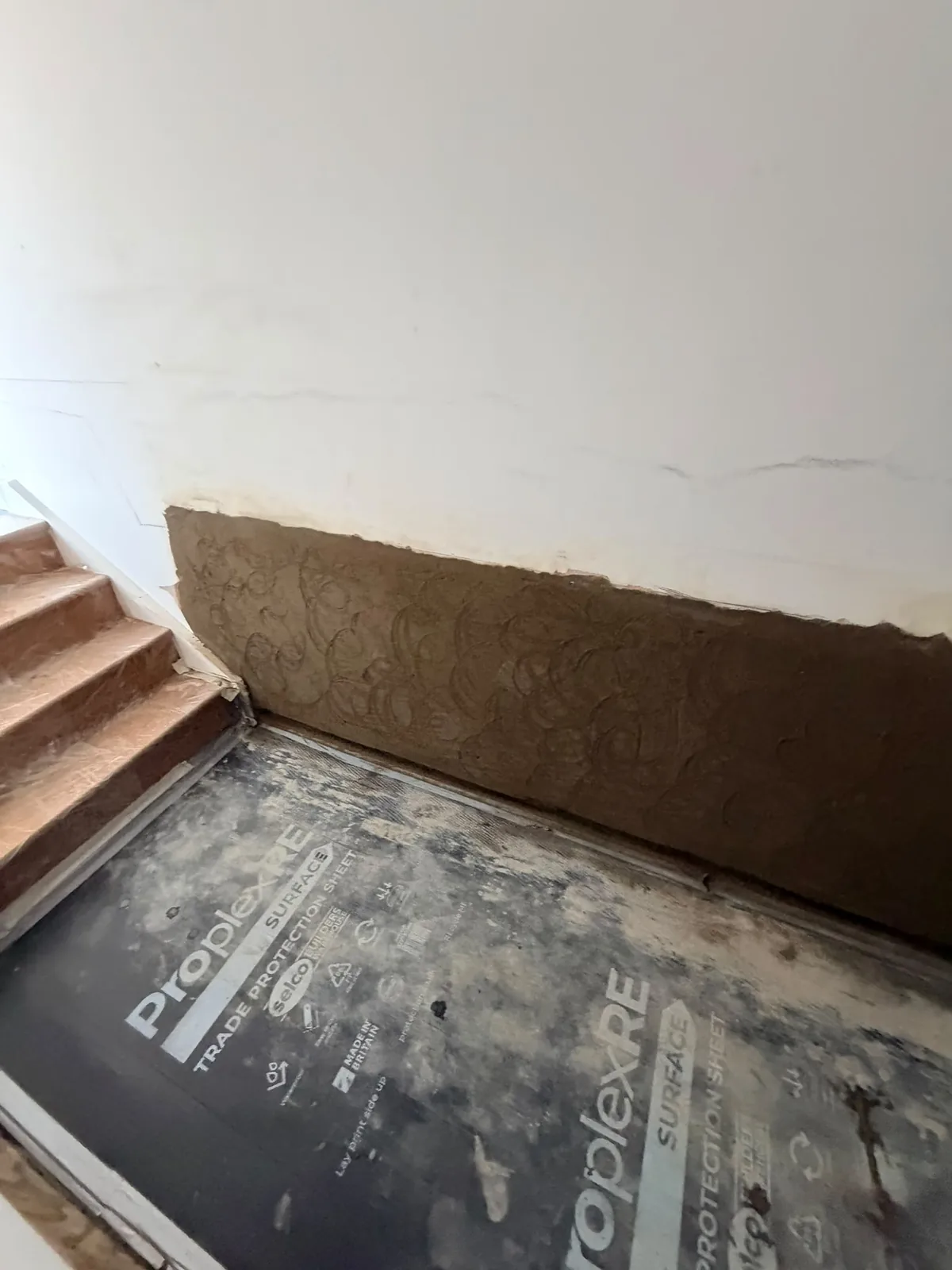 Before
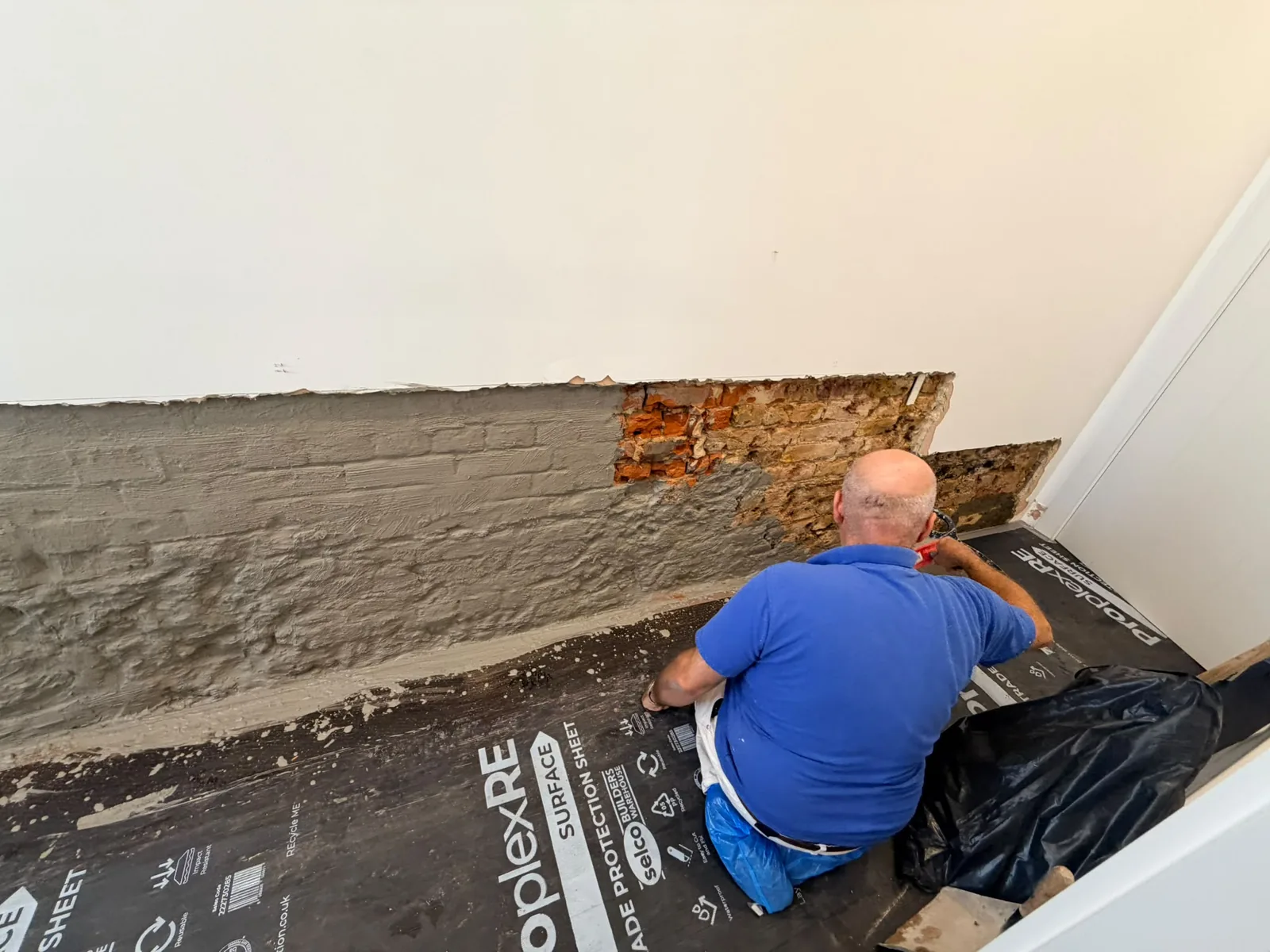 During
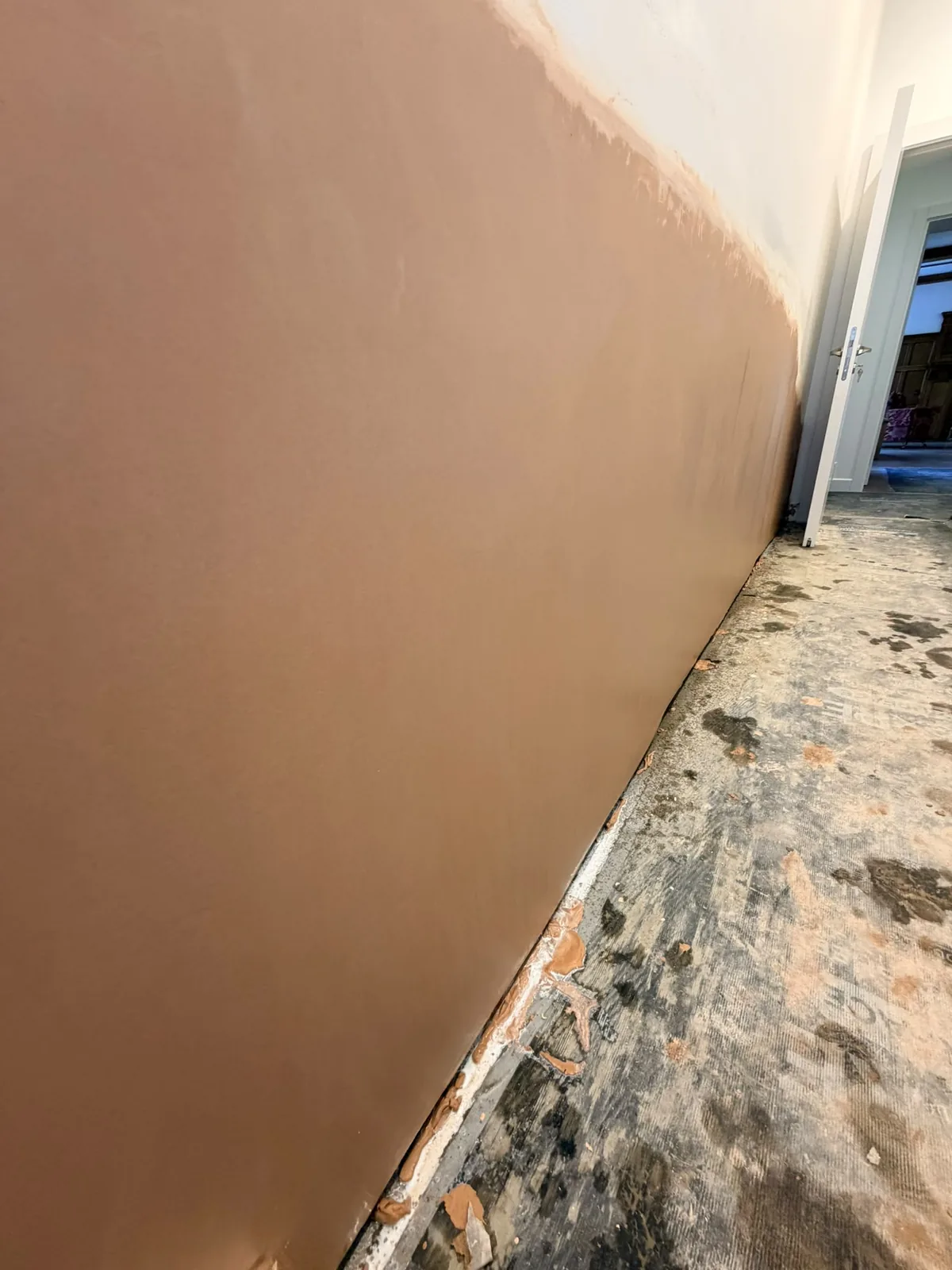 Finished
The exact scope changes by property, but the decision process should stay transparent.
Send the postcode, photographs and a short description of when the issue appears.
Review the symptoms, construction, likely sources and any previous repair.
Set out the recommended work, exclusions, preparation and finishing requirements.
Carry out the agreed repair and provide practical aftercare or maintenance guidance.
Rising damp is normally considered only after other sources have been investigated. The distribution of moisture and salts, wall construction, ground levels, rainwater defects and internal conditions all contribute to the diagnosis.
A handheld meter is useful for comparative readings, but readings in masonry can be influenced by salts and materials. It should form part of a wider investigation, not be used as the only evidence.
Not always. Removal depends on the moisture source, salt contamination, adhesion and the intended repair system. The scope should be agreed after inspection.
Drying time varies with wall thickness, materials, season, ventilation and the original moisture load. Decoration should follow the repair specification rather than a fixed universal timescale.
Yes, but the investigation must account for permeable materials and previous alterations. A breathable repair may be more appropriate than an impermeable system in some traditional buildings.
Free quotations are available for clearly defined remedial works. A Professional Damp Survey & Written Report is £220 + VAT and includes findings, photographic evidence and written recommendations.
Include the postcode, affected room, visible signs and when the problem is most noticeable. We will help identify the most useful next step.
Prefer to call?
020 8970 7471
WhatsApp
07950 225214
Email
[email protected]