
Hollow or detached plaster
Loss of adhesion can follow prolonged damp, salts, incompatible backgrounds or poor preparation.
Replastering after damp work is not simply a cosmetic skim. The background may contain moisture and salts, and the new system must be compatible with the wall, the damp-proofing approach and the final decoration.
These signs can have more than one cause. Their location, timing and relationship to the building help determine the next step.
Loss of adhesion can follow prolonged damp, salts, incompatible backgrounds or poor preparation.
Soluble salts can migrate toward the surface during drying and disrupt porous finishes.
The affected height and background condition should be established before removal.
Decoration applied too early or with an unsuitable low-permeability coating can fail while the wall is still drying.
A proposal is more useful when it explains the likely cause, the evidence, the affected construction and why a particular repair is being considered.
Remove only the agreed defective or contaminated material, protect adjoining areas and prepare the masonry without unnecessary damage.
A suitable base coat, renovating plaster or membrane-backed approach may be specified according to the damp treatment.
Finish materials, thicknesses and curing should follow the selected system and background requirements.
Ventilation, heating and vapour-permeable initial decoration may be recommended while residual moisture dissipates.
New plaster will not stop an unresolved leak or condensation problem. Dense systems may be inappropriate for some traditional walls, while very permeable finishes may not manage heavy residual salts. The specification must follow the diagnosis and substrate.
Genuine photographs showing preparation, specialist plastering and the completed finish on London property-care projects.
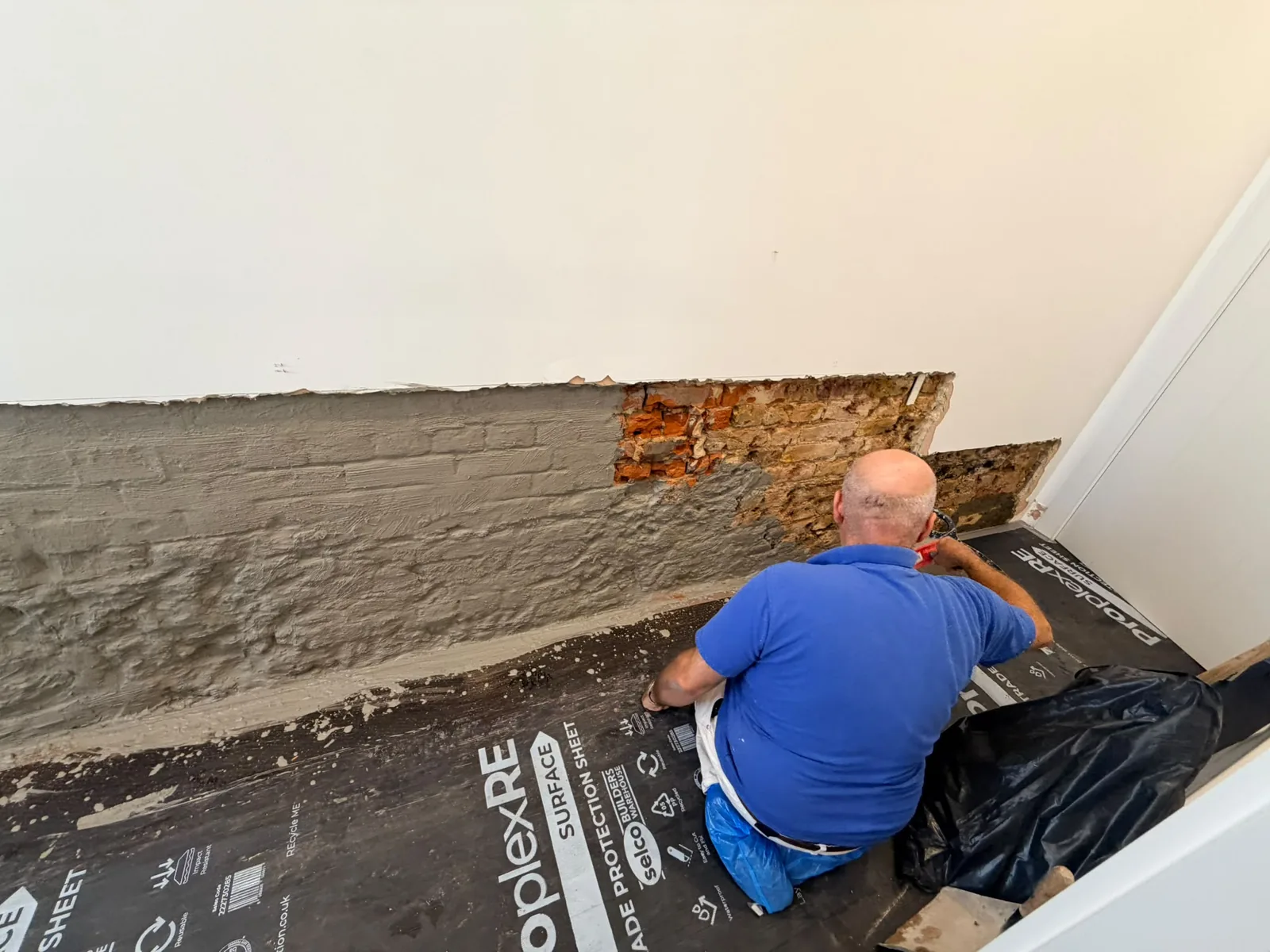 Prepare
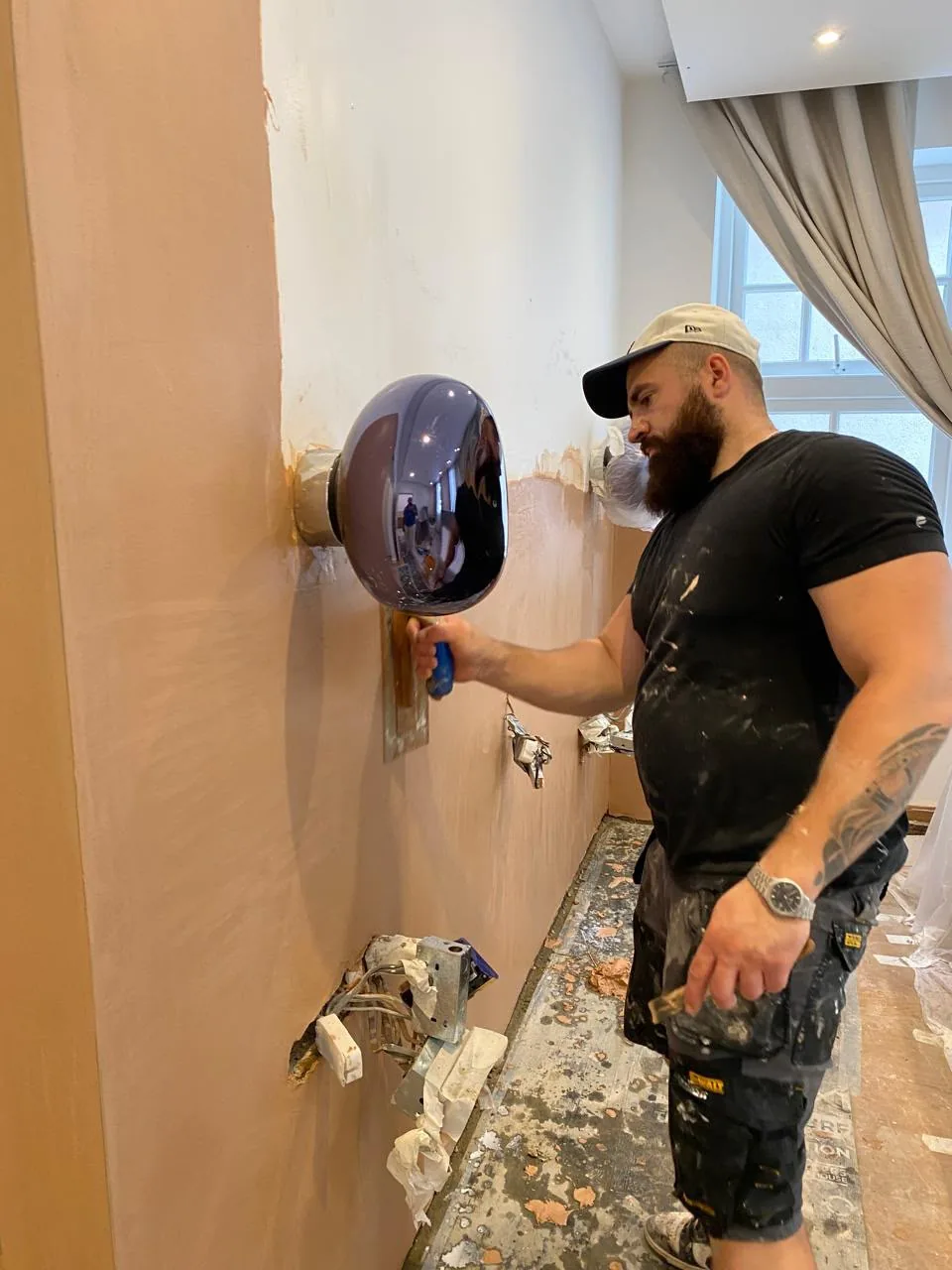 Apply
Apply
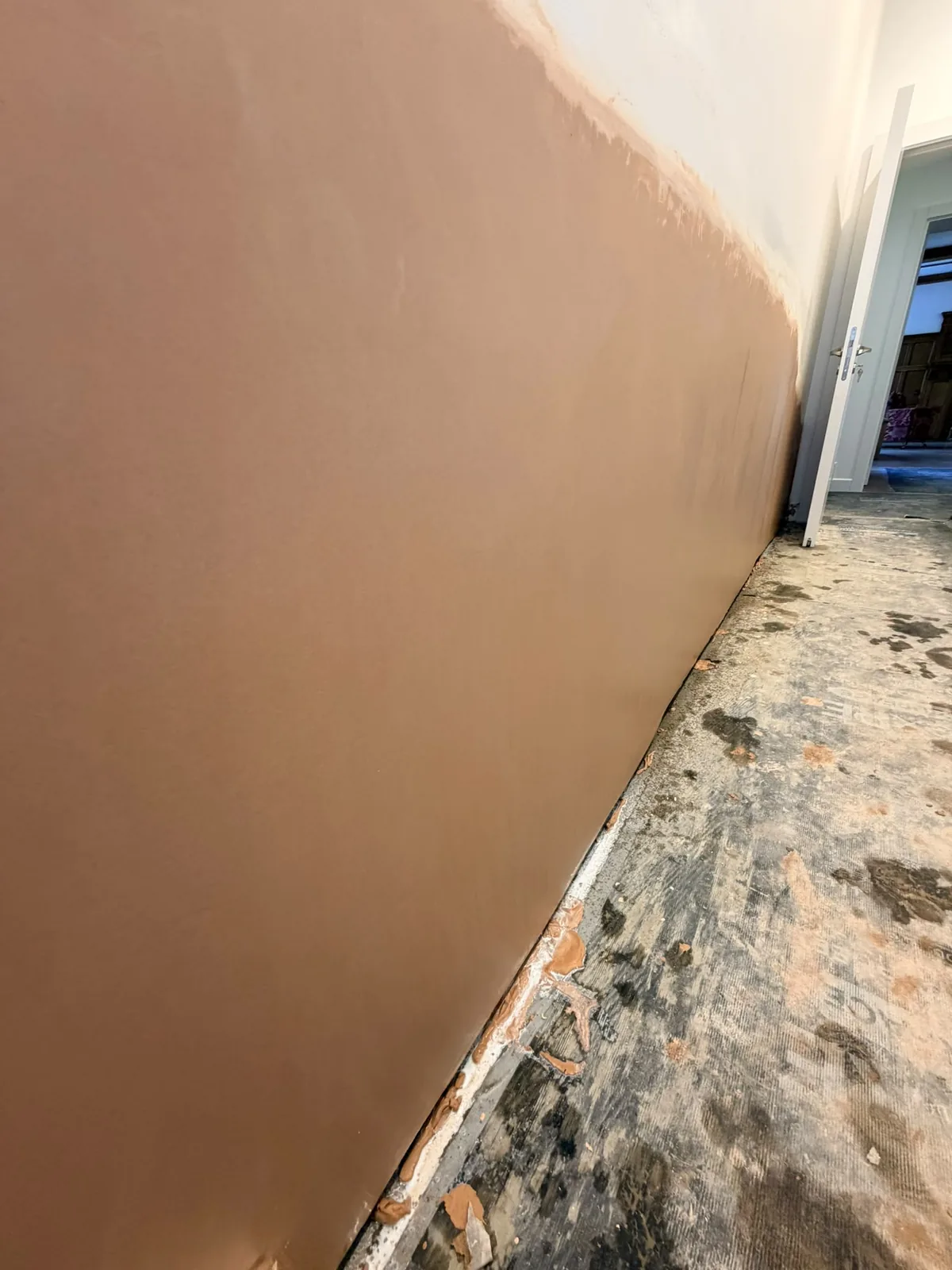 Finish
The exact scope changes by property, but the decision process should stay transparent.
Send the postcode, photographs and a short description of when the issue appears.
Review the symptoms, construction, likely sources and any previous repair.
Set out the recommended work, exclusions, preparation and finishing requirements.
Carry out the agreed repair and provide practical aftercare or maintenance guidance.
Only when the existing plaster is sound, compatible and not significantly contaminated. A skim cannot stabilise loose plaster or isolate active salts.
The scope depends on the moisture and salt profile, adhesion and chosen system. A fixed height should not be assumed without inspection.
Follow the plaster and damp-proofing specification. Drying varies, and early decoration may need a permeable finish rather than vinyl paint or wallpaper.
It can be suitable in some dry, controlled backgrounds, but may not be appropriate where residual salts or moisture remain.
The aim is a durable, well-prepared surface. Matching adjacent texture and thickness is planned during the scope, but lighting and existing finishes can reveal transitions.
Free quotations are available for clearly defined remedial works. A Professional Damp Survey & Written Report is £220 + VAT and includes findings, photographic evidence and written recommendations.
Include the postcode, affected room, visible signs and when the problem is most noticeable. We will help identify the most useful next step.
Prefer to call?
020 8970 7471
WhatsApp
07950 225214
Email
[email protected]